2025 Survey & Data
APOP’s 2025 survey provides insight into obesity and nutrition trends among U.S. dogs and cats, including body condition, owner and veterinary team perceptions, feeding practices, and weight-management behaviors.
2025 APOP Pet Weight and Nutrition Opinion Survey
The 2025 APOP Pet Weight and Nutrition Opinion Survey is an annual cross-sectional survey assessing perspectives and self-reported practices related to companion animal body condition, weight management, and nutrition among U.S. pet owners and veterinary healthcare professionals. Respondents reported on dogs and cats. Pet owners described perceived body condition as thin, ideal or healthy weight, overweight, or obese. This survey is distinct from APOP's clinical prevalence studies, in which veterinary professionals assess body condition score (BCS) directly. Findings represent self-reported perceptions and behaviors rather than clinician-assessed prevalence data.
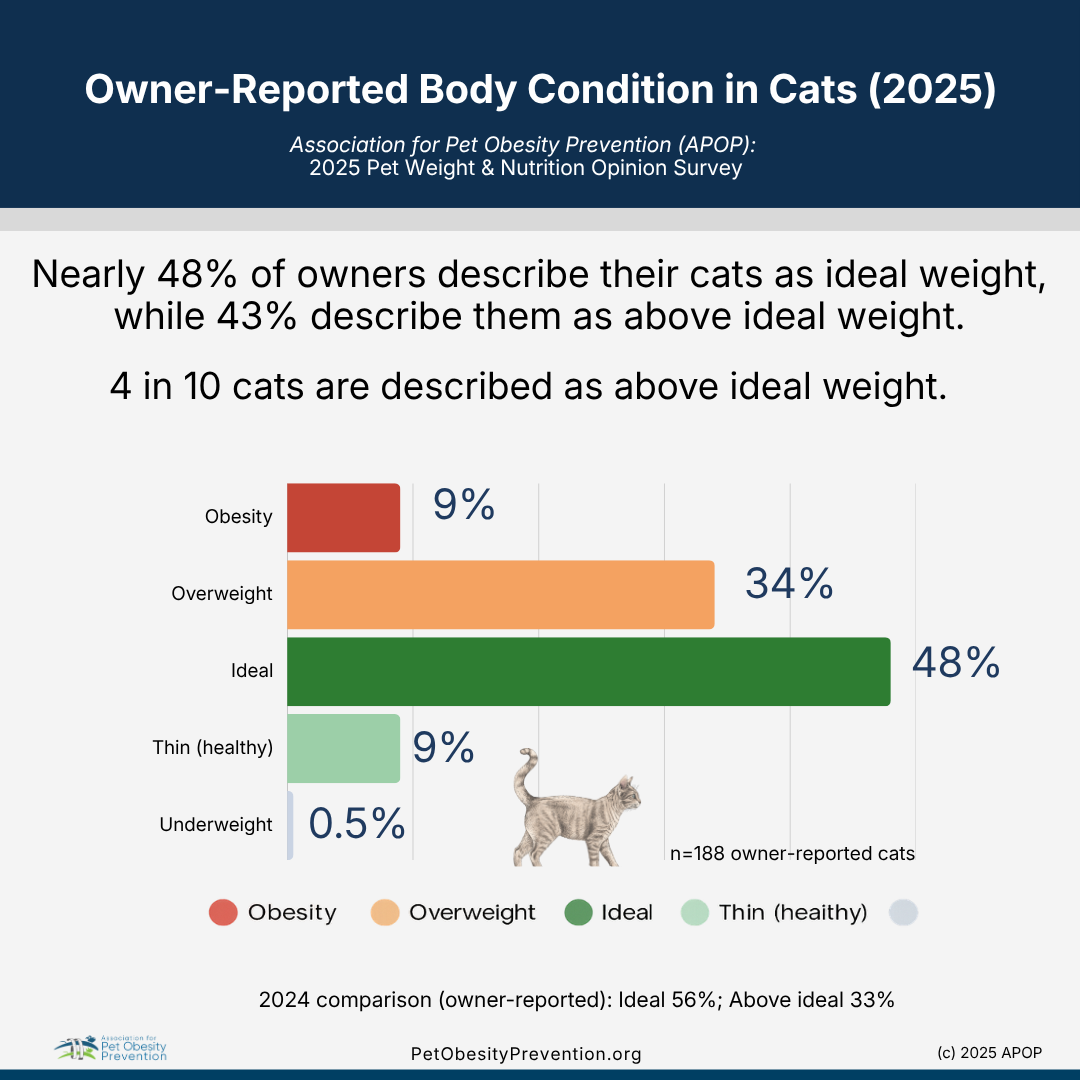
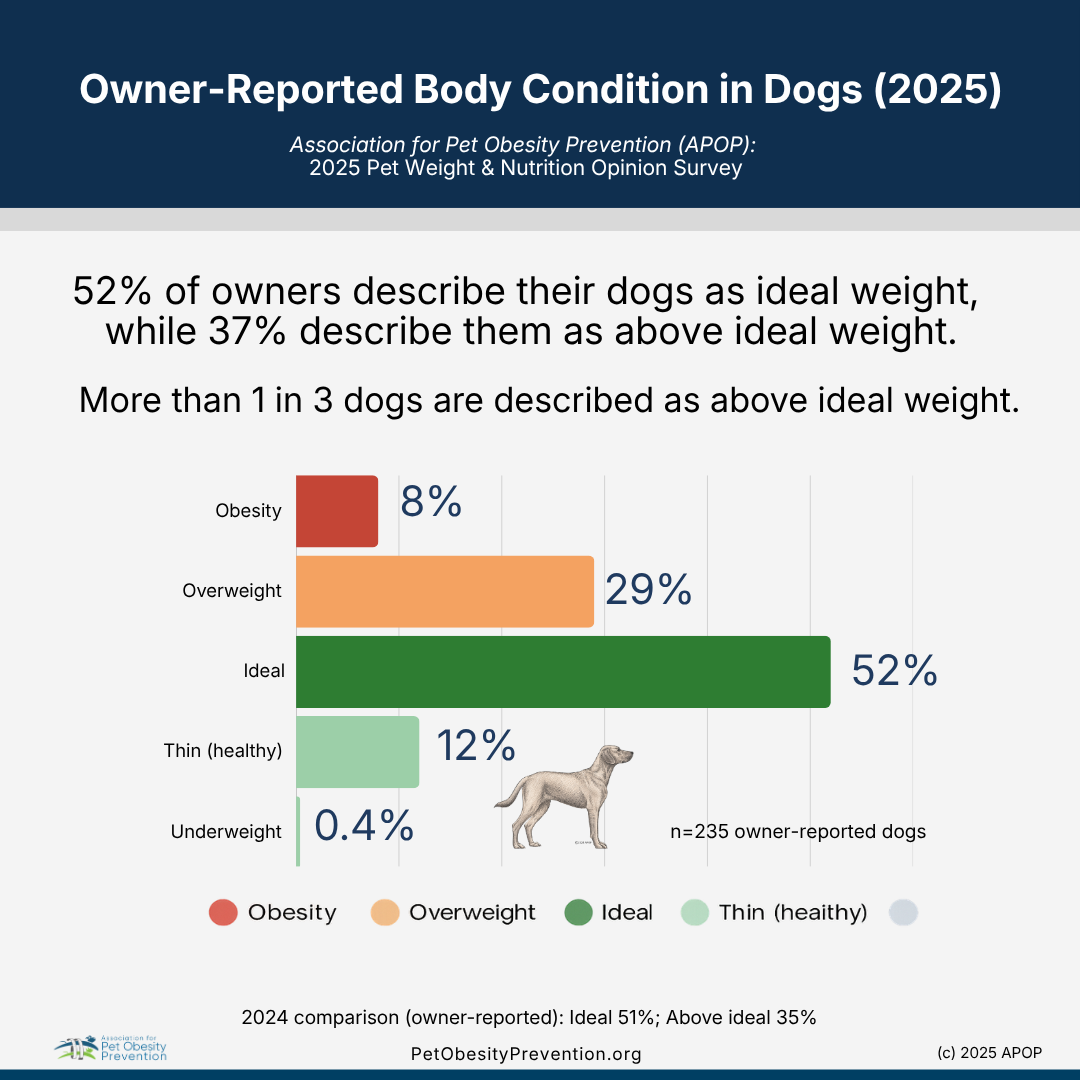
Among pet owners, 37% of dog owners and 43% of cat owners described their pet as above ideal weight, compared with 35% and 33%, respectively, in 2024. Weight-loss efforts were reported by 56% of dog owners and 53% of cat owners. Among those reporting weight-loss efforts, 28% of dogs and 19% of cats were reported to have reached a healthy target weight.
Respondents also reported challenges involving feeding practices, cost, and communication about pet weight. Veterinary professionals described continued difficulty discussing weight management with some pet owners.
These findings provide directional insight into current attitudes, practices, and opportunities in companion animal weight management. They should be interpreted in the context of the survey's self-reported, non-clinical methodology and should not be interpreted as clinician-assessed prevalence.
2025 APOP Survey
Key Findings and Strategic Insights
The 2025 Association for Pet Obesity Prevention (APOP) Pet Weight and Nutrition Opinion Survey is an annual survey designed to assess trends in perspectives and practices related to companion animal body condition, weight management, and nutrition among pet owners and veterinary healthcare professionals.
The 2025 findings show that pet owners believe many of their dogs and cats remain above a healthy body condition, veterinary teams report that they consistently recognize and address body condition during exams, and many pet owners are actively working to help their pets lose weight.
At the same time, gaps in feeding precision, veterinary communication, and follow-through continue to limit long-term success.
APOP continues its mission to improve communication consistency and translate pet obesity awareness into measurable results that improve pet health, quality of life, and longevity.
This analysis reflects responses from screened U.S. pet owners and veterinary professionals and is intended to provide directional insight into current practices, perceptions, and opportunities in companion animal weight management.
Pet Owner Body Condition Assessment Comparison
43% of cat owners described their cat as above ideal weight
37% of dog owners described their dog as above ideal weight
In 2024, 33% of cat owners described their cat as above ideal weight, versus 35% of dog owners
Inflation Is Influencing Pet Care Decisions
40% of owners report cost-related changes, including:
Switching food brands
Reducing veterinary visits
Cutting treats
Limiting therapeutic diets
Economic factors are influencing care decisions and may impact consistency and long-term adherence.
Owners Are Trying to Help Their Pets Lose Weight — With Limited Results
56% of dog owners attempted weight loss
53% of cat owners attempted weight loss
But:
Only 28% of dogs reached a healthy weight
Only 19% of cats reached a healthy weight
Owners are engaged, but success rates remain low.
The Feeding Precision Gap Is Wide
Feeding practices lack consistency and precision:
Only 3% of cat owners weigh food
Only 16% of dog owners weigh food
Most rely on measuring cups or estimation
At the same time:
Fewer than half of owners are familiar with Body Condition Scoring (BCS)
Only a minority report receiving a BCS from their veterinarian
Therapeutic Weight Loss Diets Are Underutilized by Pet Owners
Among owners attempting weight loss:
Dogs: 22% used therapeutic or prescription diets
Cats: 35% used therapeutic or prescription diets
Clinical nutrition is not consistently integrated into weight management plans.
Interest in Pet Obesity Medication Is Increasing among Vets and Pet Owners
Pet owner willingness:
Dogs: 44% (up from 34% in 2024)
Cats: 48% (up from 36% in 2024)
Veterinary willingness (assuming safety and affordability):
Dogs: 49% (up from 43% in 2024)
Cats: 52% (up from 47% in 2024)
Interest in weight-loss medication is increasing among both pet owners and veterinary professionals
Veterinarians and Pet Owners Agree That Lifestyle Choices Influence Pet Weight
68% of owners recognize their lifestyle affects pet weight
86% believe veterinarians can discuss weight comfortably
However, consistent use of practical weight-management tools, including assessment, portion control, and follow-up, remains inconsistent
76% of veterinary professionals agree that a pet owner’s lifestyle influences BCS and weight
Veterinary Communication Is a Barrier to Care
87% of veterinary professionals report emotional responses from clients during weight discussions
Common barriers include misperception of body condition, limited motivation, and challenges with follow-through
At the same time, many pet owners report little to no discomfort discussing their pet’s weight
Veterinary Professionals Rely on Body Condition Scoring (BCS)
70% perform BCS at every exam
95% recognize obesity as a disease
76% agree owner lifestyle impacts weight
Most veterinary professionals report being comfortable discussing weight and obesity with clients, indicating strong clinical readiness for these conversations.
Clinical consensus is strong that veterinary clinical obesity is a priority in medical care.
What Pet Owners Say They Need for a Weight-Loss Plan
Owners identified the following as most helpful for pet weight-loss plan adherence:
Home weighing tools
Mobile reminders
Lower-cost therapeutic diets
Regular veterinary check-ins
How We Talk About Weight
How we talk about weight matters. Conversations about obesity can be emotionally sensitive, even when both veterinary teams and pet owners share the same goal of improving a pet’s health. The 2025 findings suggest a gap between perceived discomfort and actual owner receptivity, creating missed opportunities for meaningful dialogue. Using clear, neutral, and health-focused language, such as body condition, mobility, and quality of life, can help reduce defensiveness and support more productive conversations. When communication is consistent and supportive, it becomes easier for pet owners to understand recommendations and follow through.
Turning Pet Obesity Insights Into Outcomes
The 2025 findings point to a clear opportunity to move beyond awareness and toward more consistent, structured care.
For veterinary teams, this means integrating routine Body Condition Scoring, clearer feeding guidance, and more frequent follow-up into everyday practice.
For pet owners, it highlights the need for simple, practical tools such as accurate portion measurement, regular weight monitoring, and ongoing support between visits.
For industry partners, it underscores the importance of developing solutions that improve precision, reduce friction, and demonstrate measurable outcomes.
Across all groups, the path forward is aligned: combine nutrition, communication, and monitoring into a more connected, consistent approach that supports long-term success.
About the Survey
The 2025 APOP Pet Weight and Nutrition Opinion Survey included 265 screened respondents across the United States, including 174 pet owners and 84 veterinary professionals representing 45 states. Responses were reviewed and cleaned to remove incomplete or invalid entries, ensuring a consistent and reliable dataset.
Participants represented a broad range of geographic regions, life stages, and household compositions. Most pet owners reported a recent veterinary visit, indicating that the findings reflect actively engaged households and current clinical experiences.
These results are intended to provide directional insight into how pet owners and veterinary professionals are approaching weight management today, and to help inform future education, clinical tools, and industry innovation.