Your clinic collection kit for the 2026 prevalence survey
Everything you need to record and submit dog and cat body condition data is on this page.
How to take part, start to finish
-
1
Register your clinic
If you have already registered for the 2026 survey, skip this step.
-
2
Prepare & read instructions
Review the short instructions and keep the BCS charts handy at each exam.
-
3
Collect during your window
During your chosen collection period, include all eligible dogs and cats presented to the practice.
Who to include
Include all eligible, skeletally mature dogs and cats seen for wellness, minor medical, or boarding intake during your collection window, whatever their body condition. Skeletally mature means 12 months of age or older, though large and giant breeds may not reach maturity until 18 to 24 months, so use clinical judgment. Do not include emergency or urgent cases, critical illness, terminal conditions, or visits where positioning, pain, or acute distress would get in the way of an accurate body condition assessment.
-
4
Enter each record online
Submit patient records as you go. All entries are due by December 31, 2026.
-
5
Optional
Take the opinion survey
A few minutes for veterinary staff and pet owners. Add your email at the end for a chance to win a $50 gift card.
Every record helps. We appreciate as much data as your clinic can submit.

Enter patient data
Use the button below on this device, or scan the QR code with your phone. Print the code for your treatment area or share it with your team.
Your Clinic ID is your clinic phone number. Enter it exactly as it was entered during registration.
The PDF is a one-page print sheet. PNG and SVG downloads contain the QR code only.
Prefer paper, text, or email? Online entry is preferred, but you can also submit completed forms another way.
Show text and email instructions
Print the form or fill out the editable PDF, then send it by December 31, 2026:
Text clear photos to 1-910-359-2088, or email photos, scans, or the completed PDF to apopdata@petobesityprevention.org.
Do not include owner names, patient names, or medical record numbers. Submit each record only once, whether online, by text, or by email.
The survey at a glance
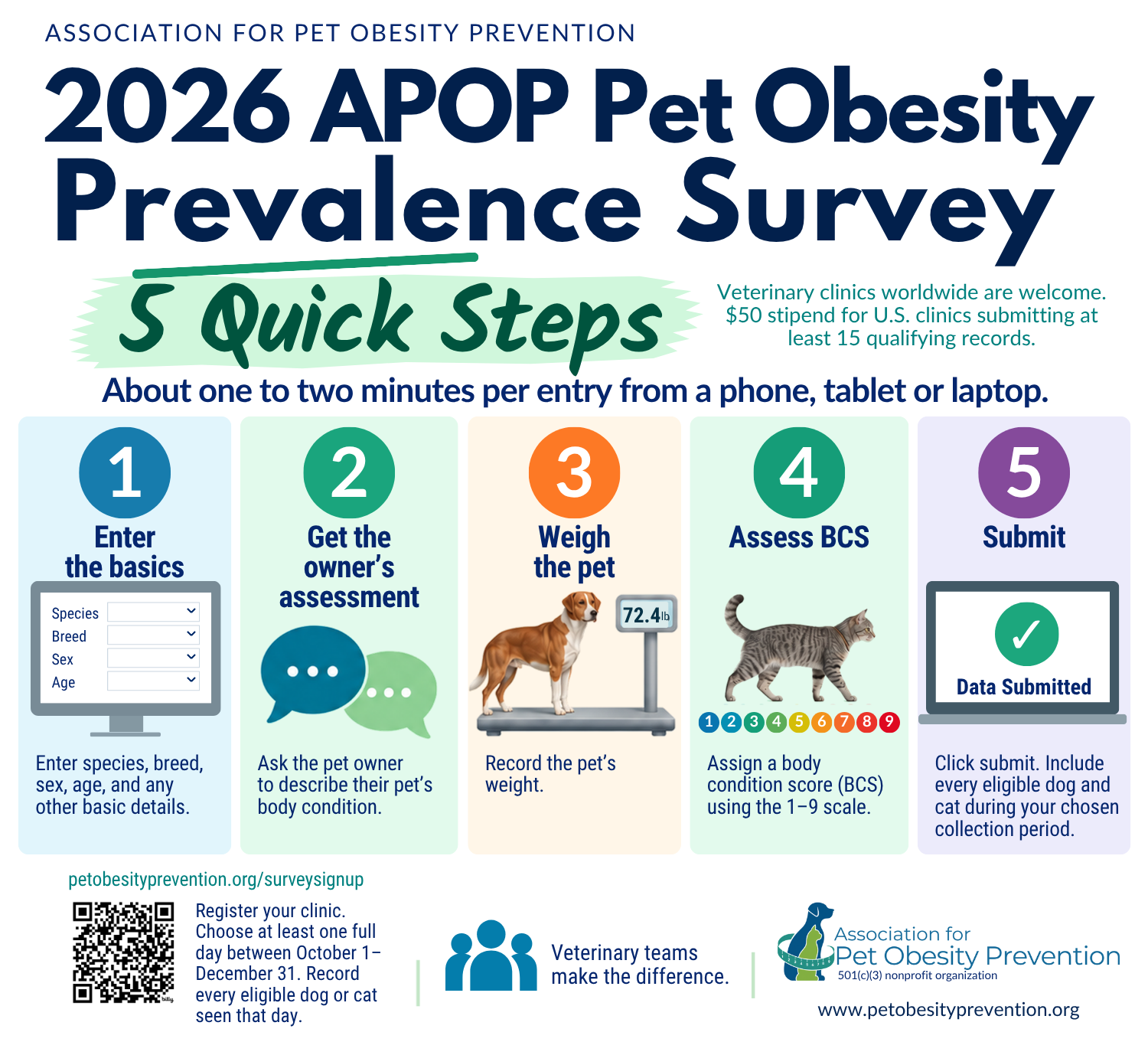
A quick summary to print or share with your team.
Quick tips
A short overview of who to include and how to keep records consistent.
- Include skeletally mature (12+ months) dogs and cats seen for wellness, minor medical, or boarding — any body condition.
- Leave out emergency, critically ill, in-pain, or terminal patients.
- Include every eligible pet that day, not only the ones that look overweight; record each once.
- For each pet, record species, sex, spay/neuter status, age, weight, BCS, and the owner's impression of their pet's body condition.
- Ask the owner to describe the pet's body condition before the pet is weighed or assigned a clinical BCS. Use a neutral tone and facial expression, and avoid verbal or nonverbal responses that could influence the owner's answer.
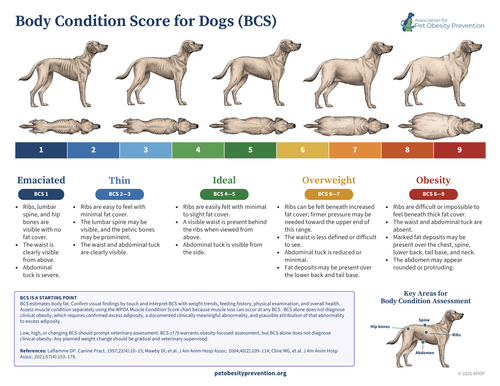
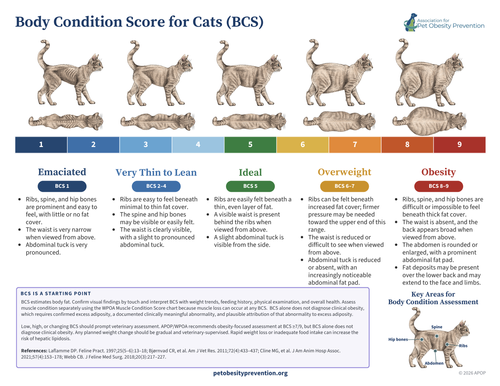
- Use the 9-point BCS scale: 4–5 ideal, 6–7 overweight, 8–9 obesity.
- Never include owner names, pet names, or medical record numbers.
- Photos are optional — get the owner's verbal OK first.
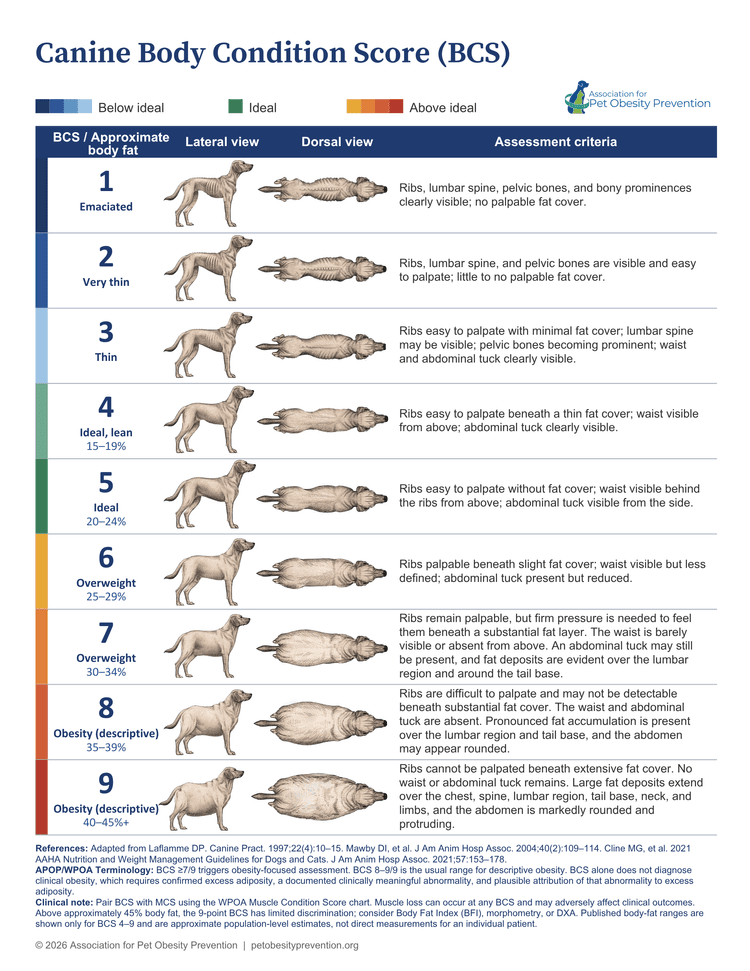
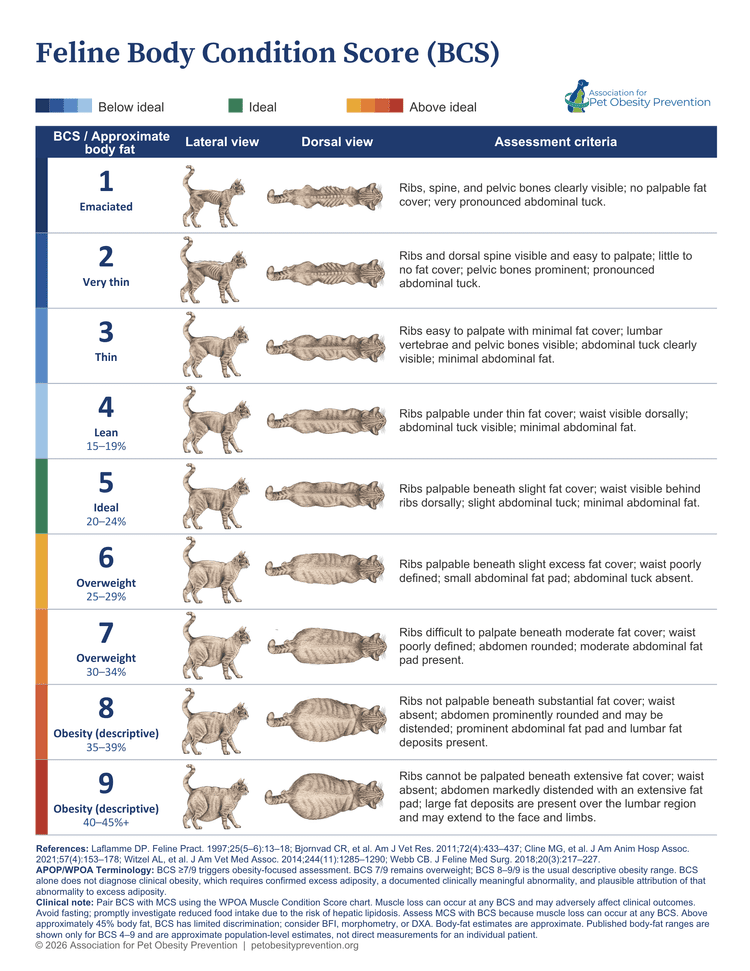
Body condition score (BCS) charts
Keep these open while you score. Clinical charts are for your team; client charts are for owner conversations and take-home use.
Download BCS charts
Clinical charts for your team
Dogs
Cats
Clinic stipend
Show that you took part
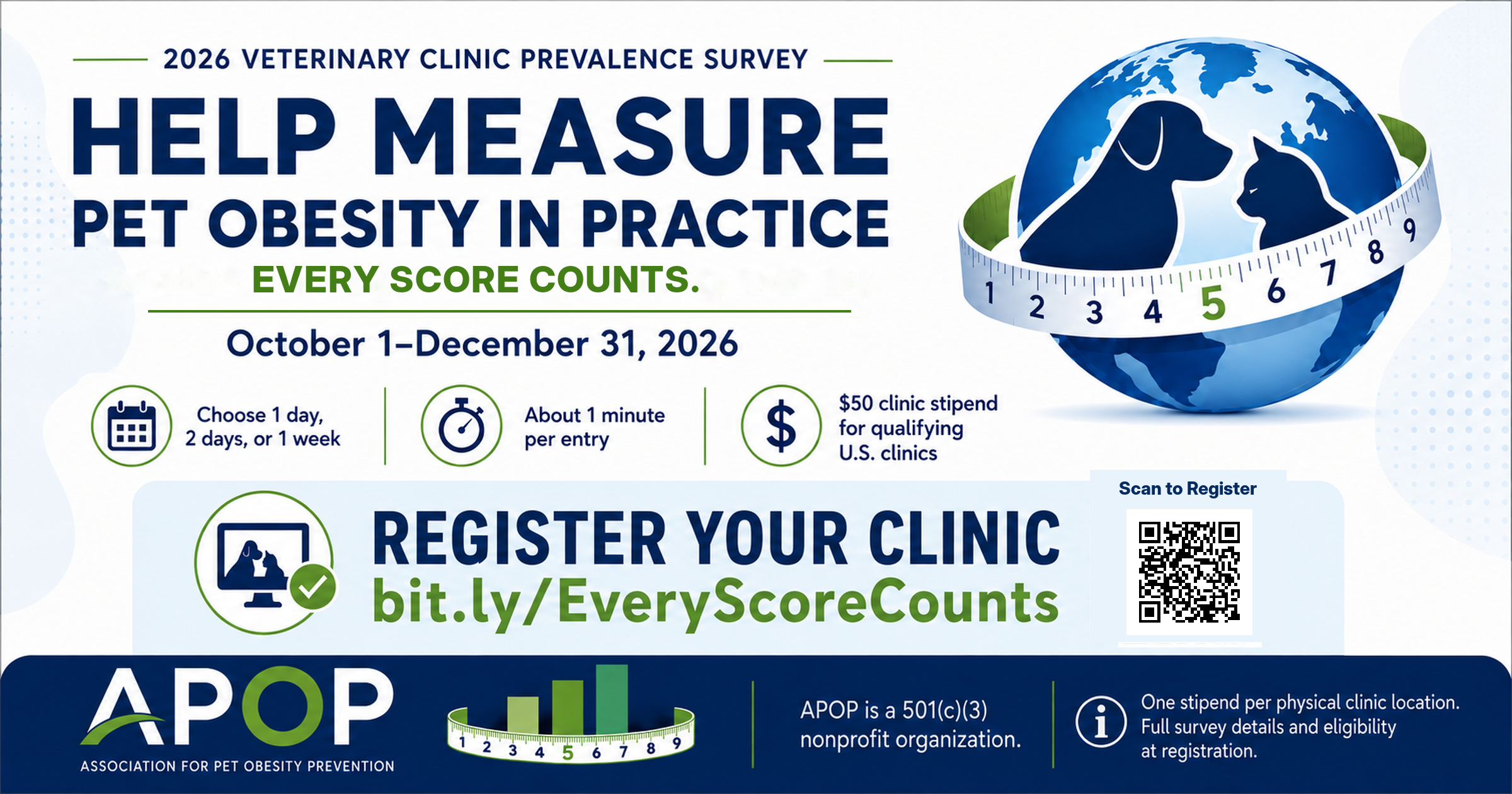
Display the 2026 Prevalence Study Partner badge and share ready-made posts. Select a thumbnail to view the full image, or download the PNG.
Participation badge & social posts


For state VMAs and partner organizations
Graphics and ready-to-use copy to invite clinics to take part.
Outreach graphics & logos

Why your clinic's records matter
Since 2007, APOP has worked with veterinary clinics to track overweight and obesity in dogs and cats. Your records measure how common overweight and obesity really are, and reveal the gap between how owners see their pets and what the exam shows. Together they inform public health education, prevention, and care. This research depends on clinics like yours.