New Survey Data: Most Pet Weight-Loss Attempts Fall Short.
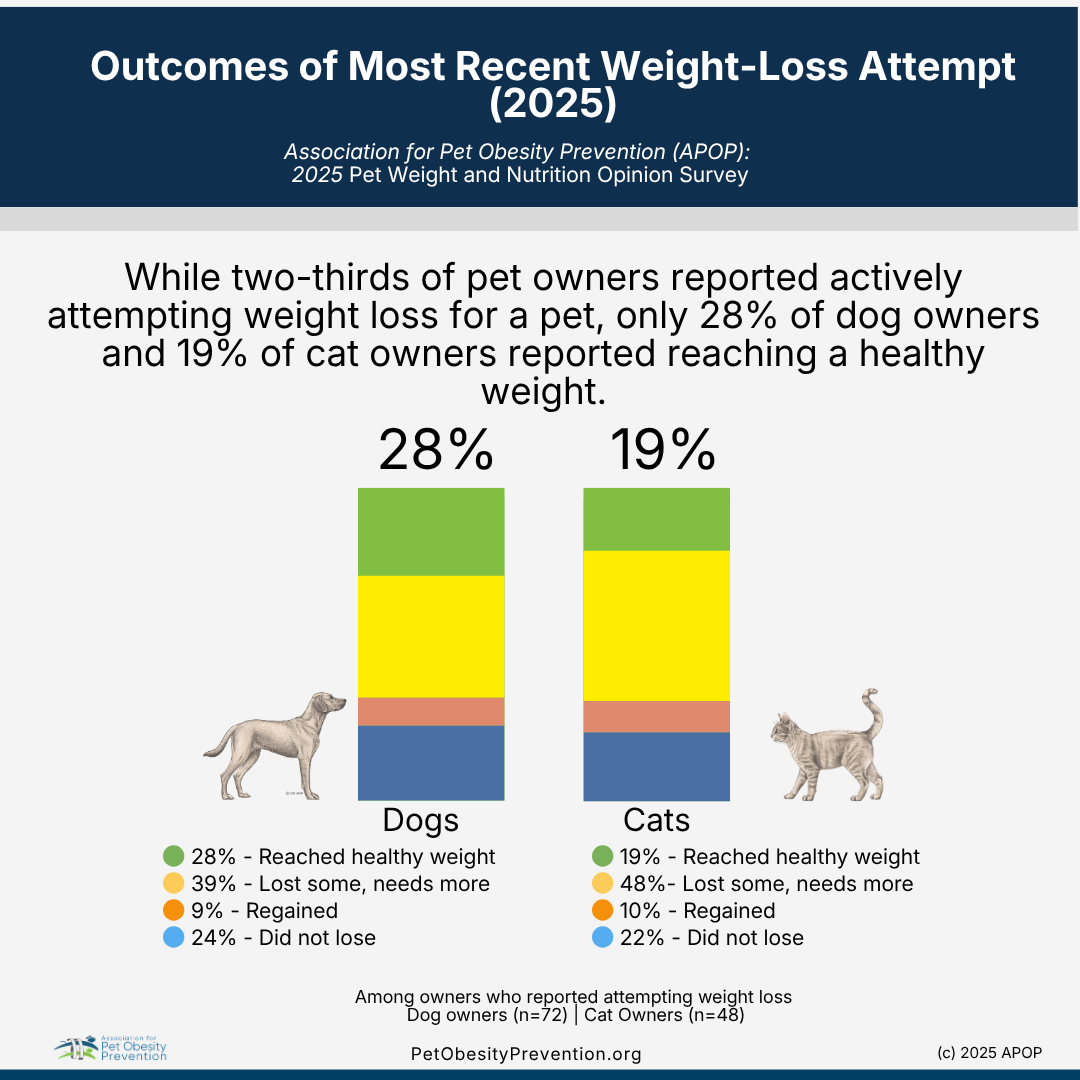
LELAND, NC — March 22, 2026 — Most pet owners who tried to help their dog or cat lose weight said the effort didn't work. In a new survey from the Association for Pet Obesity Prevention (APOP), only 1 in 4 dog owners and fewer than 1 in 5 cat owners reported that their pet reached and maintained a healthy body condition. The findings, based on owner-reported assessments, point to a troubling gap between effort and outcomes and raise questions about whether pet owners are getting the tools and guidance they need.
The gap between effort and outcome isn't a motivation problem. The barriers are biological, psychological, and systemic, and most weight-loss plans don't come close to addressing all three.
"Pet obesity is a disease, not a discipline issue," said Dr. Ernie Ward, APOP founder. "When 4 out of 5 cat owners say they can't reach a healthy weight for their pet despite trying, the failure isn't theirs. It's a sign that calorie restriction alone doesn't account for the biological complexity of weight regulation."
Three Barriers Driving the Gap
The survey identified three compounding barriers to achieving and maintaining a healthy body condition.
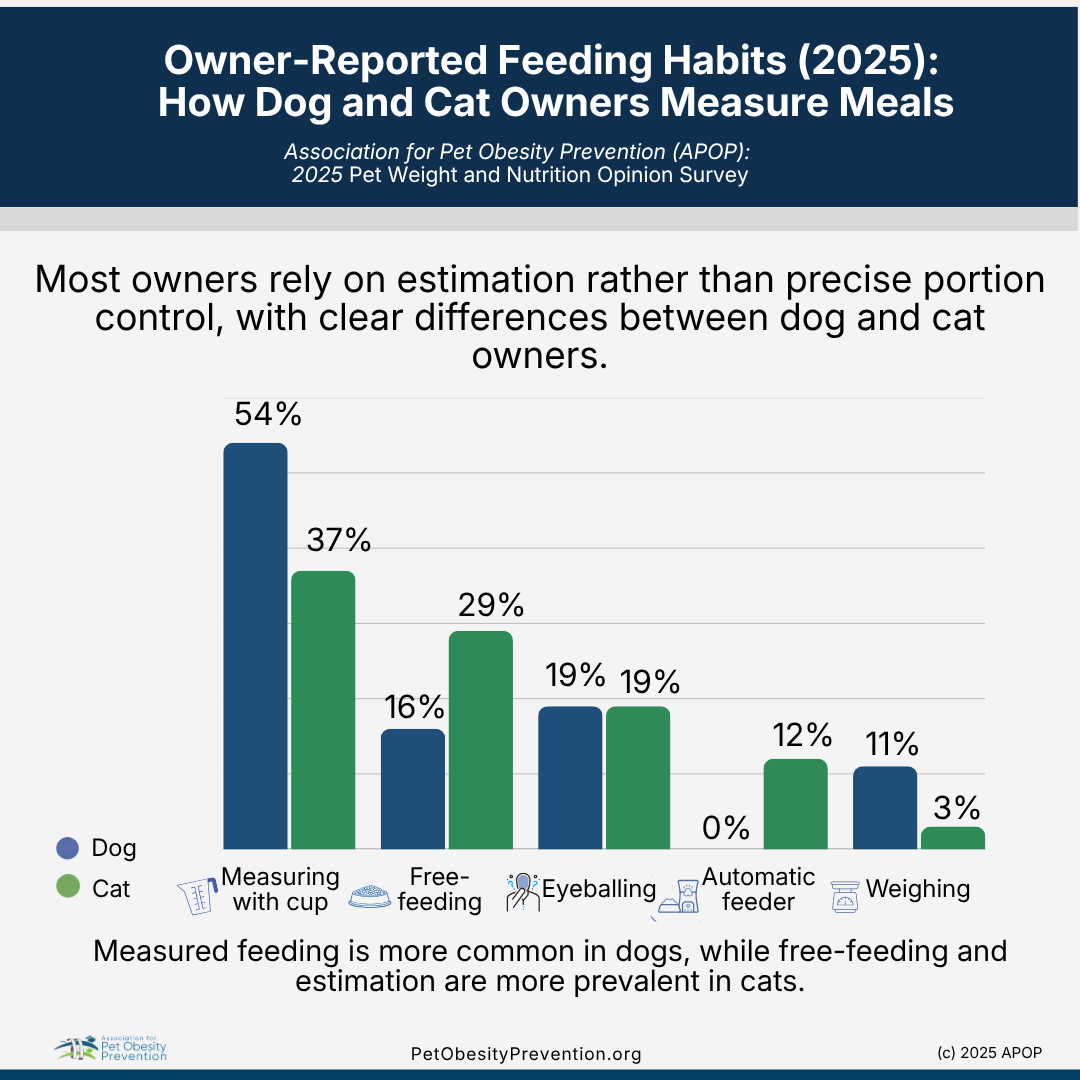
Food measurement is less precise than owners assume. Weighing dry pet food on a kitchen scale is the most accurate way to control portions, because kibble size and density vary across brands and formulas, making standard measuring cups unreliable. Yet only 3% of cat owners and 16% of dog owners reported weighing their pet's food. Most rely on visual estimation, and even 5–10 extra kibbles per meal can add up over time, reducing the intended calorie deficit.
One survey participant described weighing individual kibble pieces and freeze-dried treats just to calculate an accurate per-piece count. Most owners aren't doing that, and the gap between that level of precision and a rough cup measure is often the difference between progress and a plateau.
Economic pressure is reshaping care decisions. Forty percent of pet owners report that current economic conditions are affecting how they manage their pet's health. For some, that means switching to lower-cost foods that are often higher in calories. For others, it means skipping weight-check visits altogether, which are the appointments most likely to catch early gains before they become harder to reverse.
The most effective clinical tools remain underused. Therapeutic weight-loss diets are specifically formulated to work with the body's metabolic response to calorie reduction, the same response that causes most weight-loss efforts to plateau. But only 22% of dog owners and 35% of cat owners in the survey had used one. The survey also found growing owner interest in medical interventions for pet weight management, a trend APOP plans to track in future research.
Encouraging the Conversation
The data point with the most immediate implications isn't about food or exercise. It's about communication.
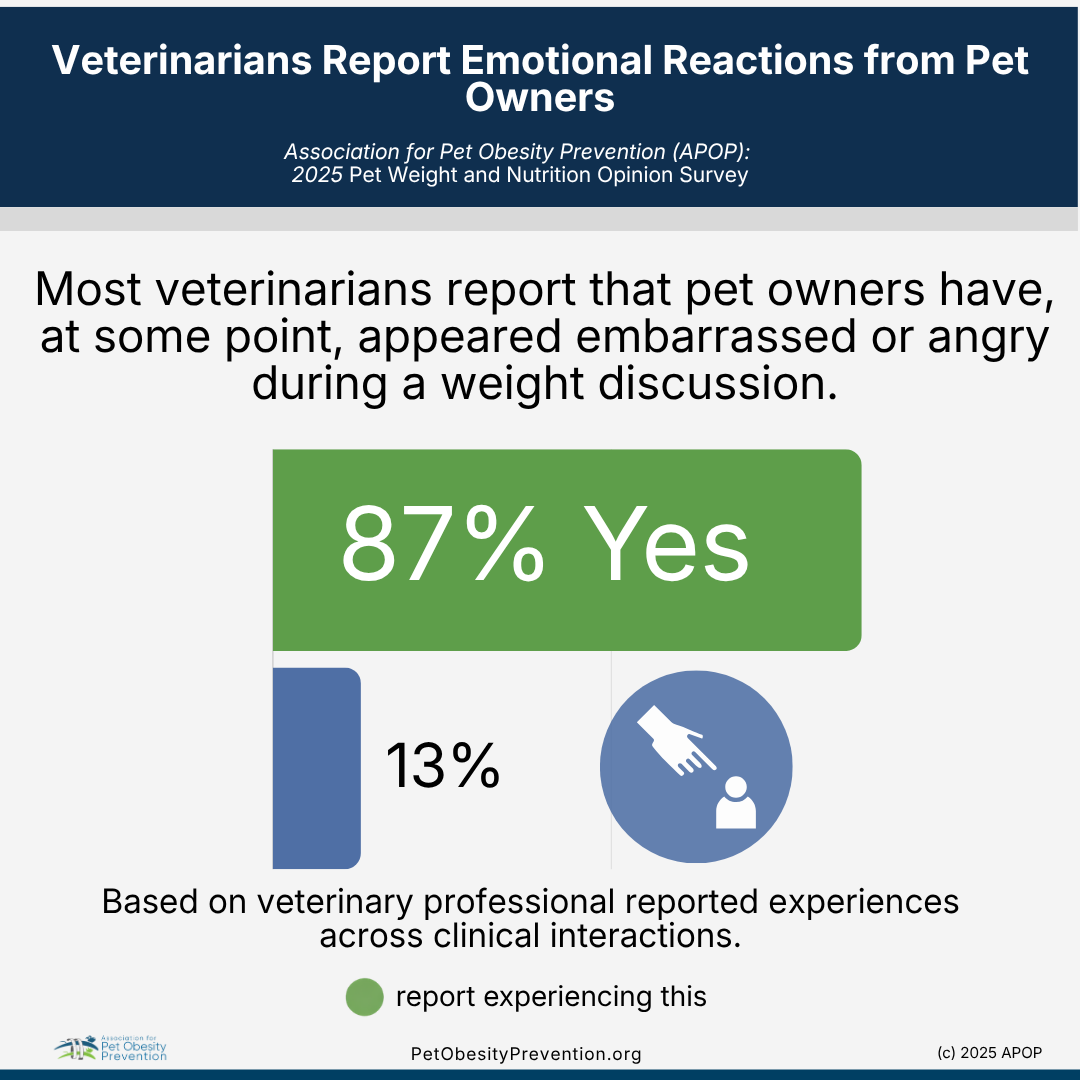
Ninety-five percent of veterinary professionals recognize obesity as a disease. Yet 87% report at least one instance where concern about a client's reaction influenced how they approached a weight conversation. Most pet owners surveyed reported being receptive to these discussions. But a single uncomfortable encounter, a client who appears embarrassed or responds with frustration, can shape how a veterinary professional handles every conversation that follows.
The result is a consistency gap. Seventy percent of veterinary teams report scoring body condition at every wellness exam. But only 21% do so at most other visits. That's a problem, because a dog presenting for a cruciate tear or a cat coming in for poorly regulated diabetes is still a patient whose weight and nutrition matter. When scoring only happens at wellness checks, obesity gets treated as just a lifestyle issue instead of the clinical disease it is.
One participant said they never considered their cat overweight, assuming he was simply a big cat, until a family member suggested a vet visit. That owner wasn't defensive. They were waiting for someone to say something.
"There's a perception gap, and it can be self-reinforcing," said Dr. Ward. "The clinical knowledge exists. The willingness exists. But one difficult conversation can quiet a dozen necessary ones. The data tells us most owners are ready to hear it. The challenge is giving veterinary teams the confidence and consistency to keep saying it."
A Call to the Veterinary Community
2026 is APOP's U.S. Prevalence Study year. The organization is recruiting veterinary clinics, industry partners, and academic institutions to help establish current national benchmarks for pet weight and body condition. Data collection will be a centerpiece of Pet Obesity Awareness Month in October, with full results published in early 2027.
"We're asking for something specific," said Laura Ward, APOP's Executive Director. "Sign up as a 2026 Prevalence Study partner and start using the new precision feeding tools and weight-loss calculators in your practice. The more clinics that participate this year, the stronger and more meaningful the data we can bring to the profession next year.”
Full survey results and study enrollment are available at www.petobesityprevention.org.
About APOP
The Association for Pet Obesity Prevention is a nonprofit dedicated to research, education, and advocacy on pet obesity through evidence-based resources and professional collaboration. APOP's 2025 Pet Obesity and Nutrition Opinion Survey drew on responses from 265 participants across 45 states, including 174 pet owners and 84 veterinary professionals.