
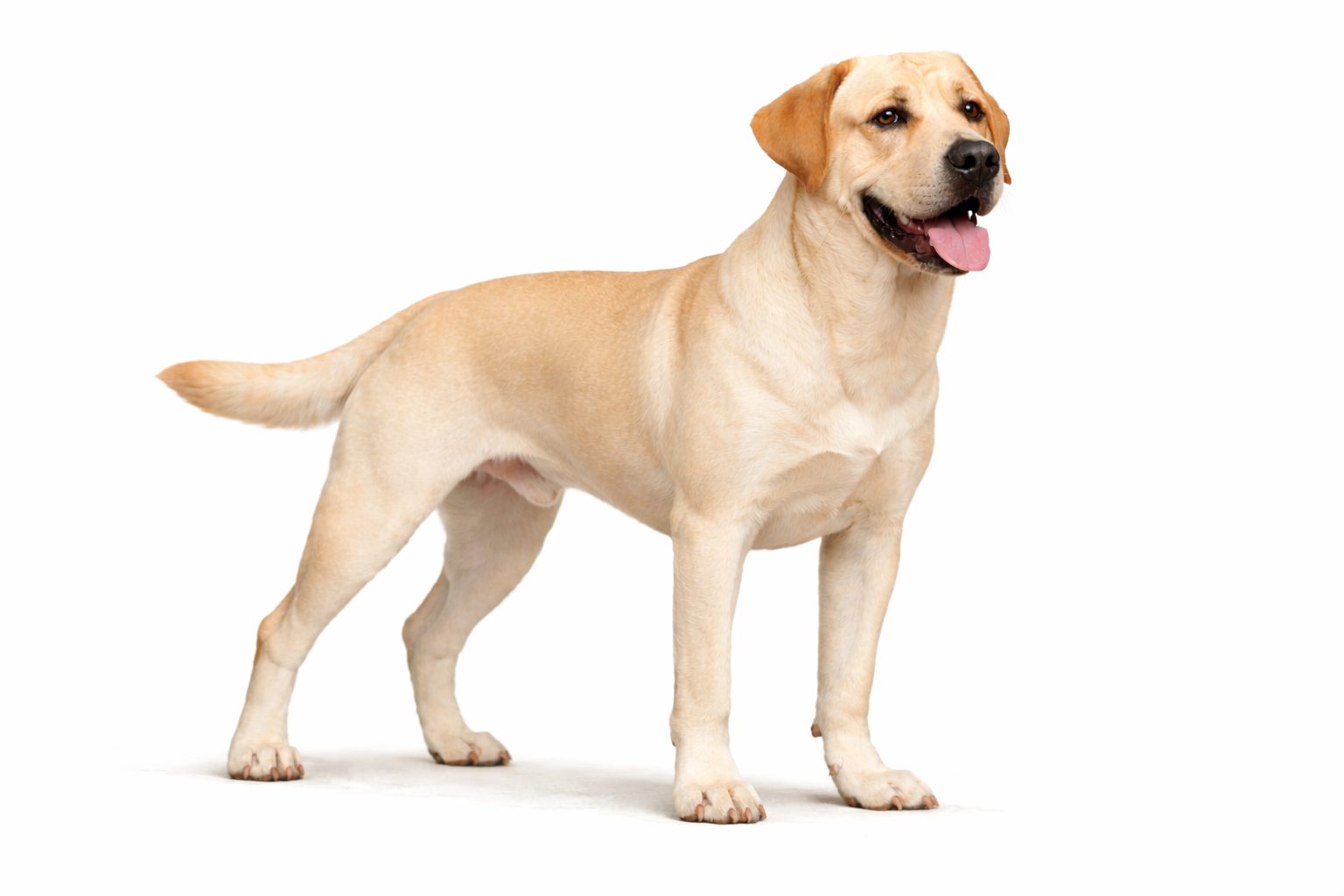
Labrador Retriever: Dog-to-Human Weight Comparison
See an illustrative human-weight comparison using your Labrador’s weight and an adult height.
A comparison, not a weight assessment. This does not estimate Body Condition Score (BCS), diagnose excess body fat, or set a target weight.
Dog-to-Human Weight Calculator
For fully grown Labradors only. Not for puppies or pregnant or nursing dogs.
Illustrative human-weight comparison
- Dog weight entered:
- Breed reference used:
- Position relative to the reference:
For perspective only. This number does not represent the same body fat, BCS, or health risk in a person. It is not a weight goal for you or your dog.
Ask your veterinary team to confirm body and muscle condition and an appropriate weight before changing feeding.
Typical Breed Ranges (Reference Only)
These are the approximate weights listed in the AKC breed standard for working-condition Labradors. They are reference values, not an individual dog’s ideal-weight target. Shoulder height is shown for context and is not used in the calculation.
Breed source: AKC Labrador Retriever standard (PDF, opens in a new tab).
How this comparison works
This is a mathematical illustration, not a clinical conversion between dogs and people. It uses a breed-standard weight range and two adult human weight references.
Human reference values
The human reference weights are calculated from the selected height using BMI values of 18.5 and 24.9. Weight in kilograms = BMI × height in meters squared.
CDC defines its adult “healthy weight” BMI category as 18.5 to less than 25 for people age 20 or older. This illustration uses 24.9 as a fixed upper calculation value. BMI is a screening measure, not a complete assessment of a person’s health.
Human reference: CDC adult BMI categories (opens in a new tab).
How the values are matched
Within the breed range, the calculator places the human comparison at the same proportional position between the two human reference weights.
Above the breed range, it multiplies the upper human reference by the dog’s weight divided by the upper breed reference. Below the breed range, it applies the same approach using both lower references.
This matching rule is an illustrative convention. Choosing a different reference or adult height changes the result. The reference sources support the breed and BMI values, not a clinical equivalence between species.
How to Check Body Condition at Home
The number on the scale doesn’t tell the whole story. This quick check helps you spot changes early and decide when to check in with your veterinary team.
60-second home check
- ✓Ribs: You can feel them easily with light pressure.
- ✓Waist: From above, there’s a gentle narrowing behind the ribs.
- ✓Tummy tuck: From the side, the belly rises slightly toward the back legs.
If ribs are hard to find, the waist disappears, or the belly hangs straight down, your dog may be carrying extra body fat.
Feeding tips that make a difference
- ✓Measure meals. Use a measuring cup or kitchen scale.
- ✓Limit treats. Aim for treats under 10% of daily calories.
- ✓Recheck regularly. Monitor weight and body condition every 2–4 weeks.