Body Condition Score and Muscle Condition Score Charts
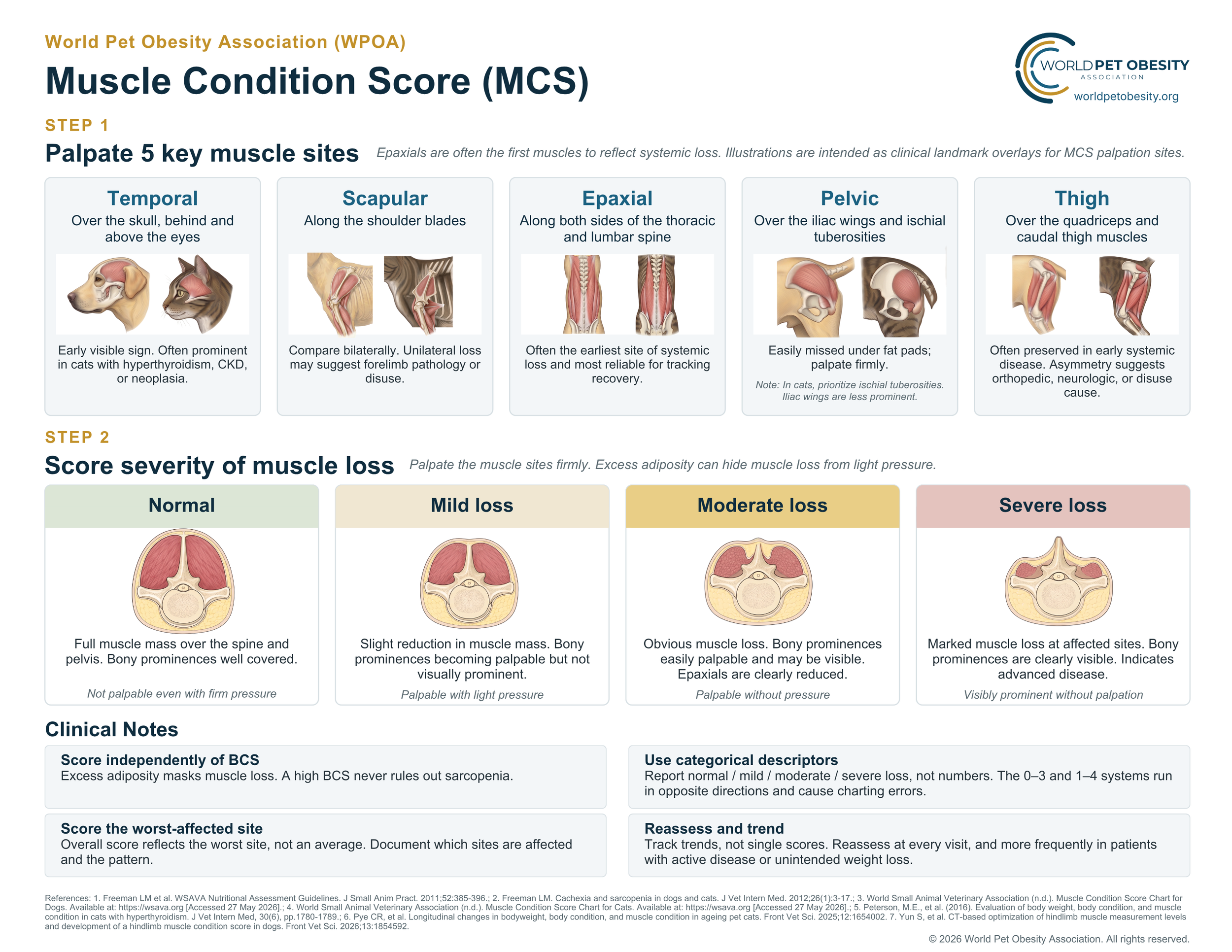
Body Condition Score (BCS) estimates body fat and overall body condition. Muscle Condition Score (MCS) evaluates skeletal muscle in dogs and cats. These tools provide different information and are most useful when considered together. They support education and screening but do not replace a hands-on veterinary assessment.
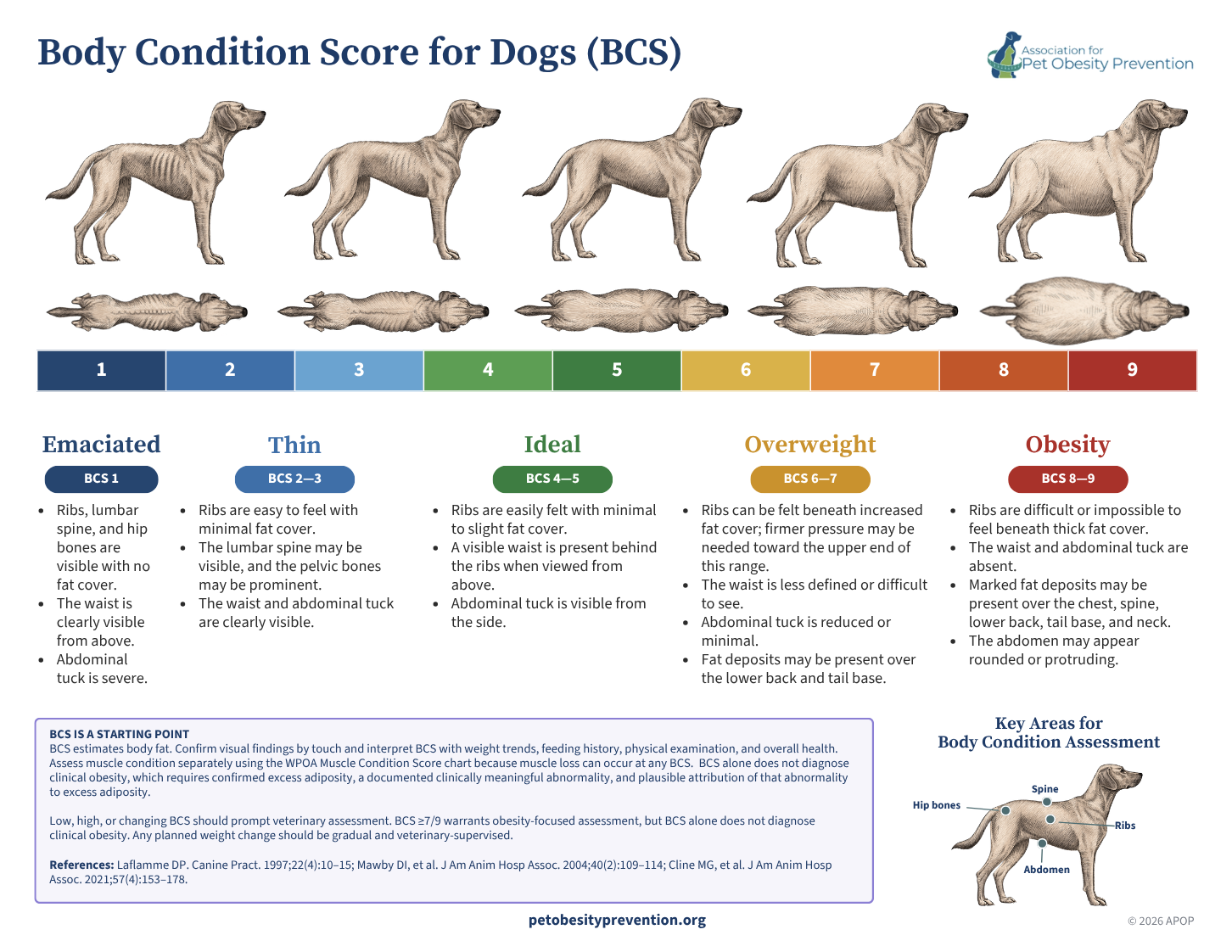
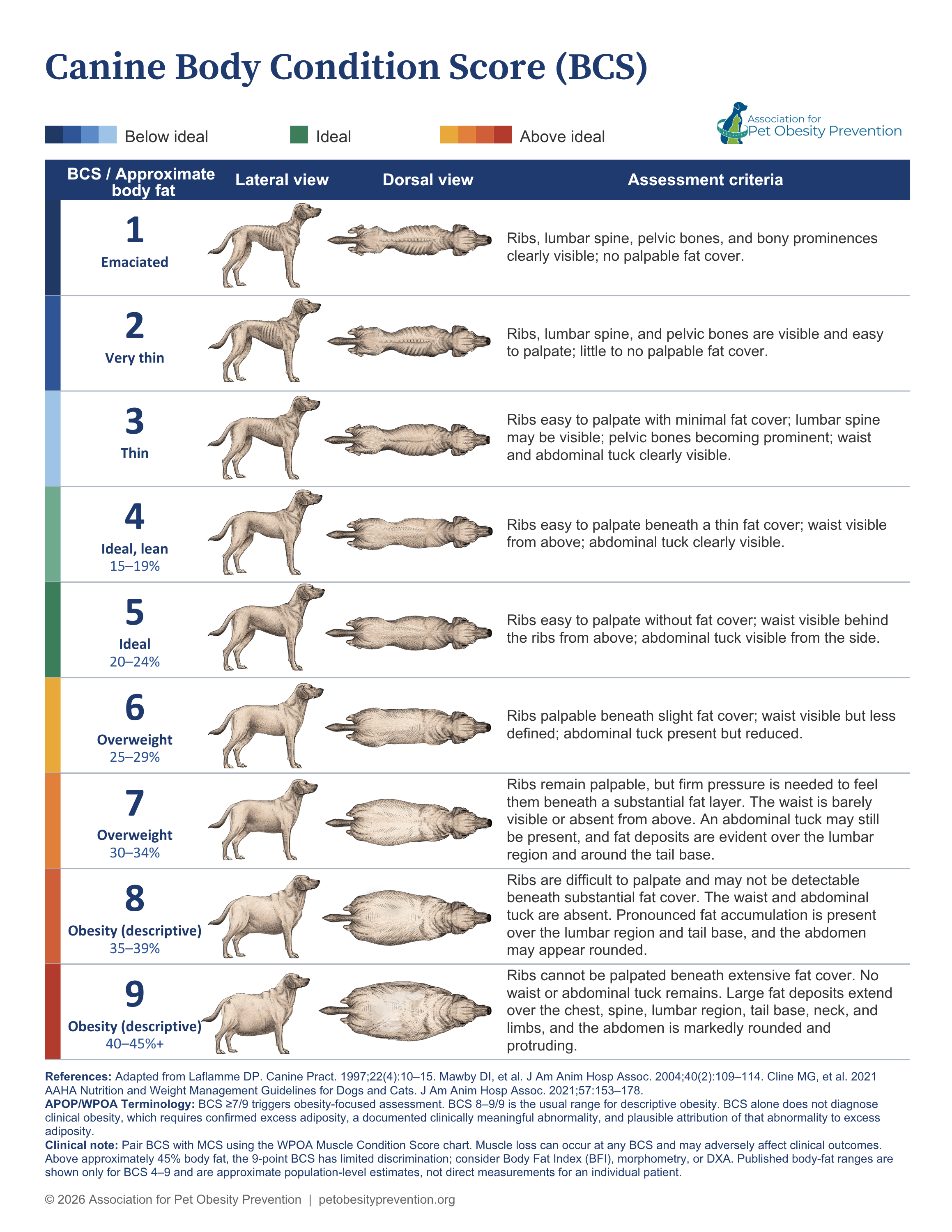
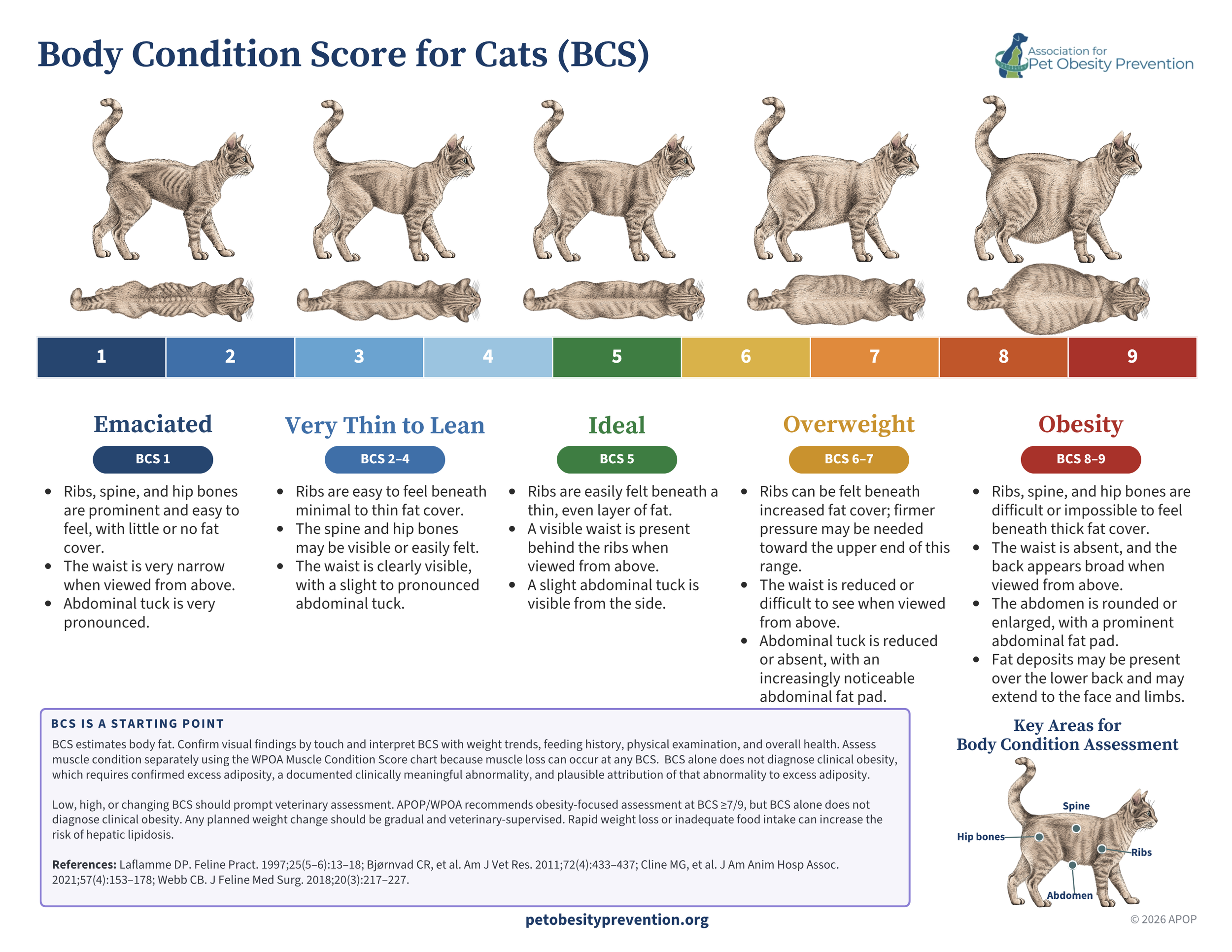
Look and palpate to estimate fat coverage, then assign a score on the 1–9 scale.
Assess five muscle sites separately from BCS and describe loss as normal, mild, moderate, or severe.
Both formats use the 1–9 scale. The quick guide groups scores so it is easier to scan. The detailed chart shows every score separately and includes more assessment criteria.
WPOA provides multilingual BCS and MCS downloads. Availability varies by species, chart type, and language.
Dog BCS charts
Choose an easy-reference overview or a complete score-by-score chart.
Quick visual guide
Easy referenceA clear overview for pet owners, veterinary teams, and general education.
Detailed 9-point chart
Clinical detailEach score is shown separately with fuller criteria for assessment, documentation, and teaching.
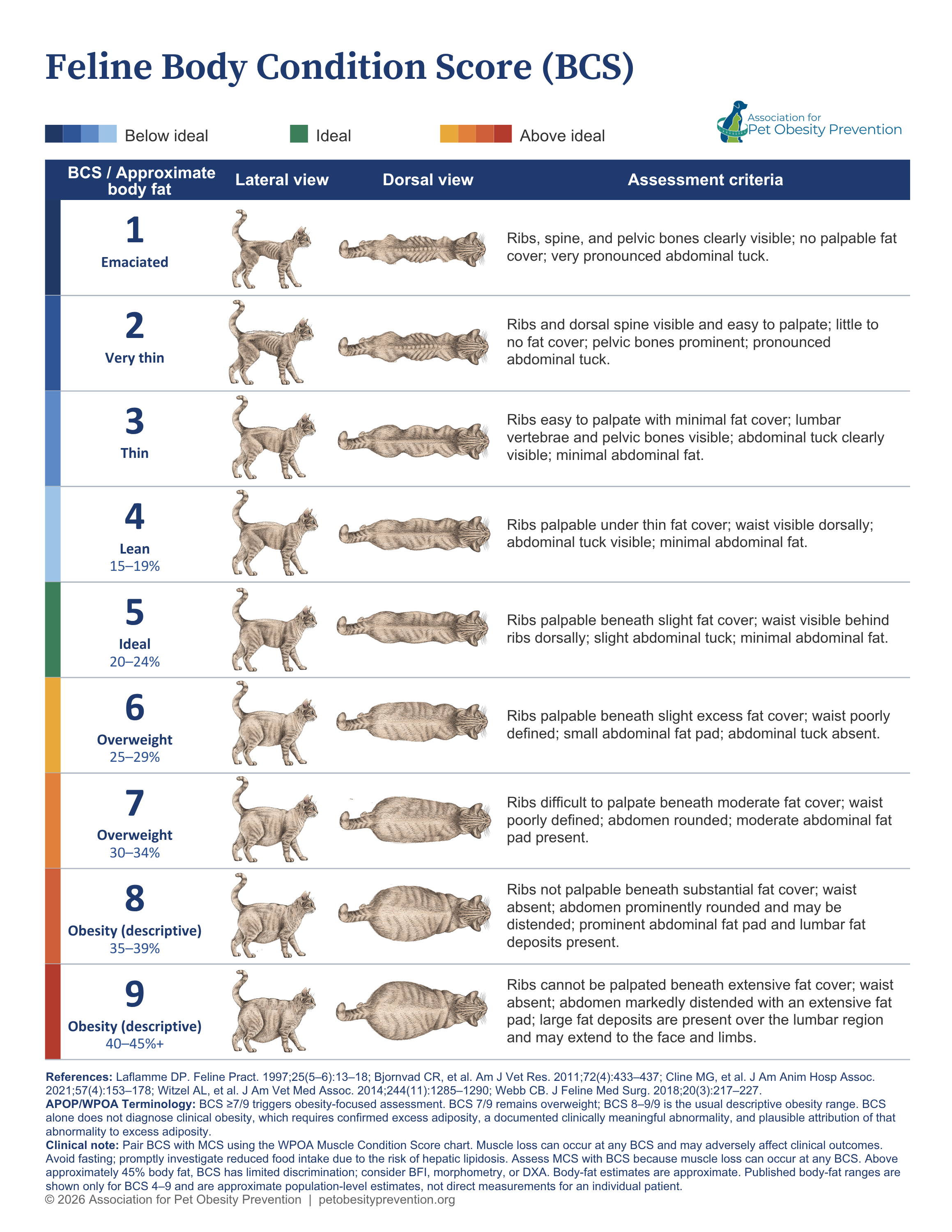
Cat BCS charts
Choose an easy-reference overview or a complete score-by-score chart.
Quick visual guide
Easy referenceA clear overview for pet owners, veterinary teams, and general education.
Detailed 9-point chart
Clinical detailEach score is shown separately with fuller criteria for assessment, documentation, and teaching.
Rabbit BCS chart
A practical visual reference for estimating body condition in rabbits.
Quick visual guide
Easy referenceA 1–9 overview for rabbit owners, veterinary teams, and general education.

Horse BCS charts
Choose an easy-reference overview or a more detailed chart that includes score-by-score criteria.
Quick visual guide
Easy referenceA clear overview for horse owners, veterinary teams, and general education.
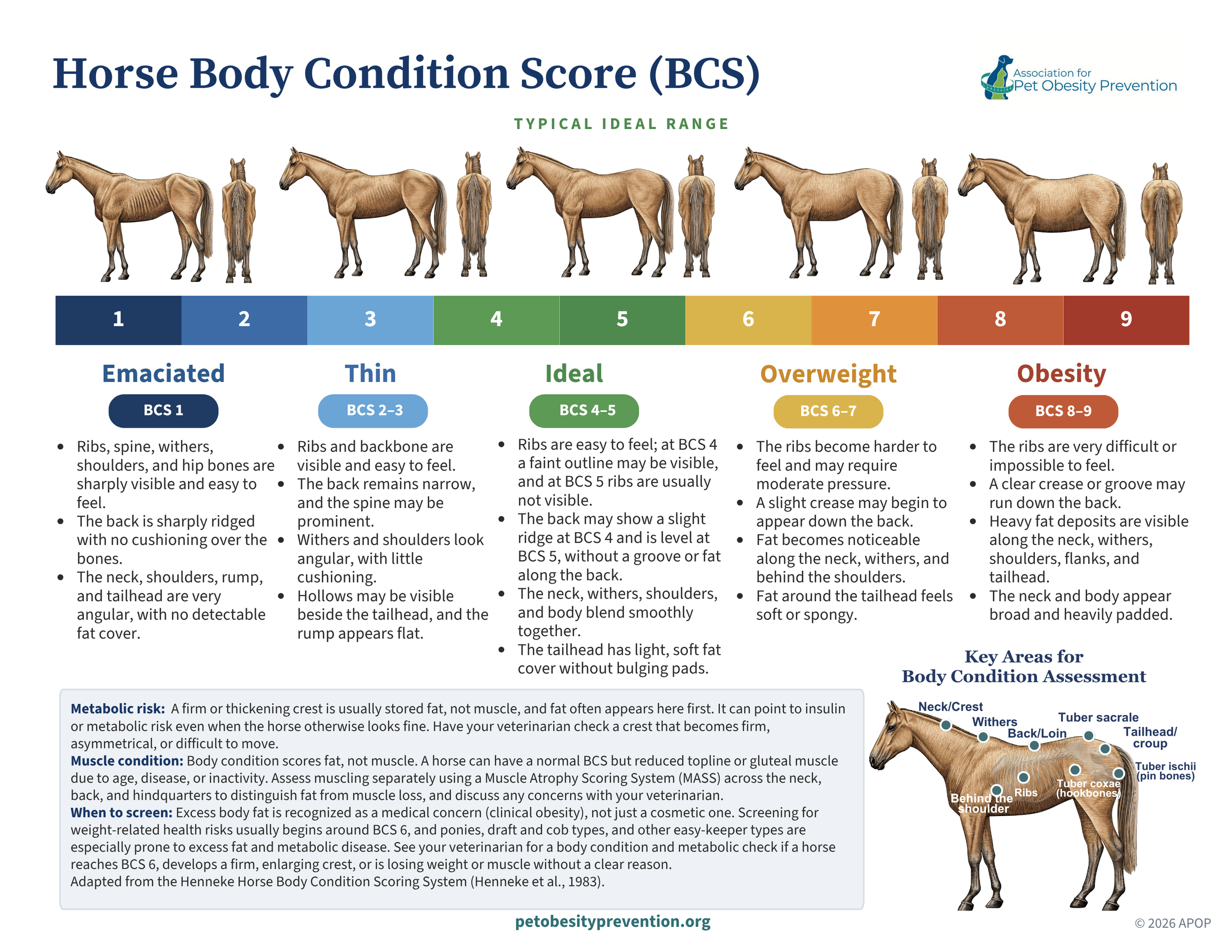
Detailed 9-point chart
Clinical detailExpanded assessment criteria with additional clinical scoring information for documentation and teaching.

Dog & cat MCS chart
MCS evaluates skeletal muscle independently of body fat. Use the combined chart to assess five muscle sites and describe the worst muscle loss as normal, mild, moderate, or severe.
Combined dog and cat muscle condition chart
Clinical guideA detailed chart for clinical assessment, documentation, teaching, and guided client education.