
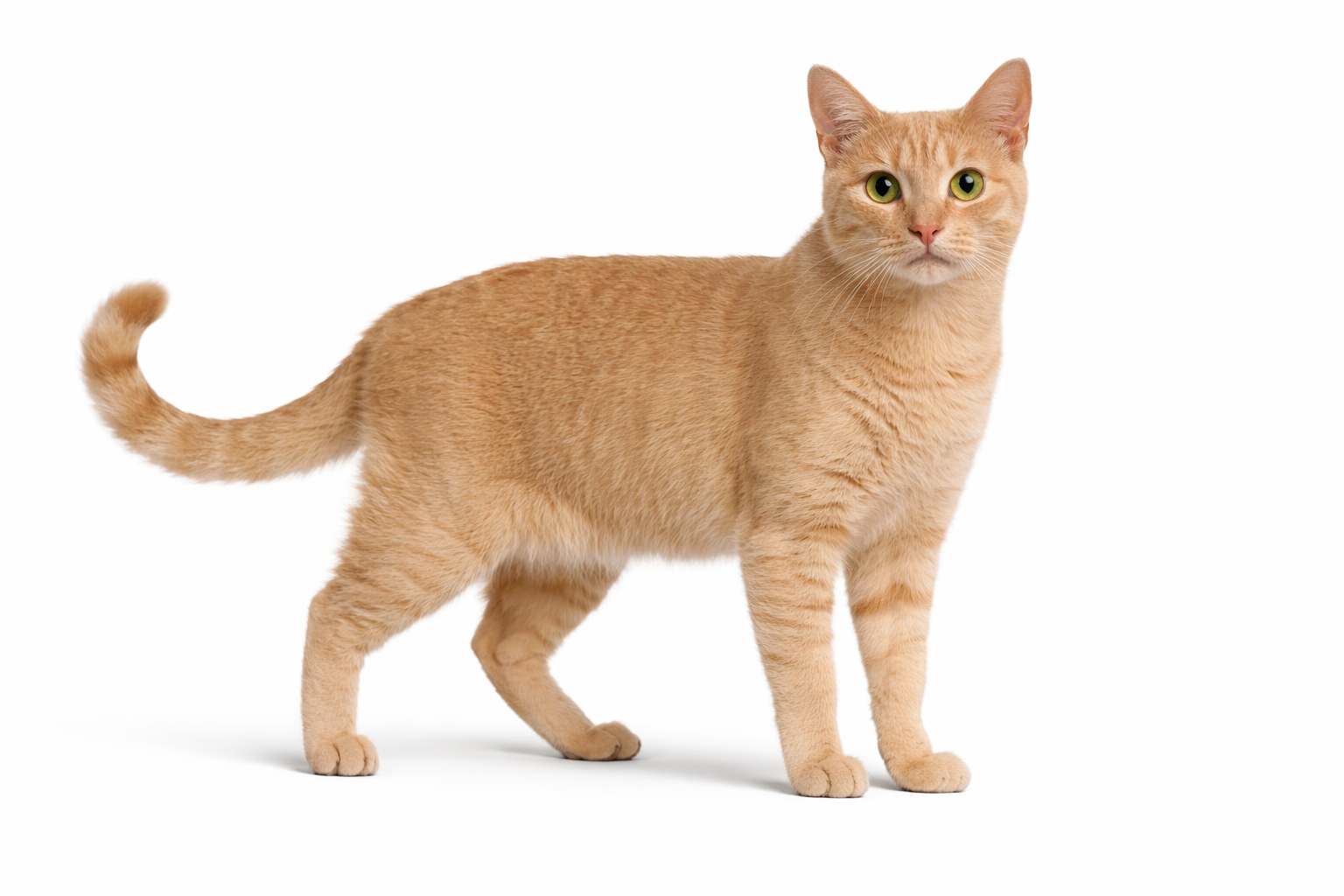
Domestic Cat Healthy Weight Calculator and Body Condition Score (BCS)
Domestic cats come in short-hair, medium-hair, and long-hair coats and can vary in frame size and body shape. Because of this, there is no single “ideal weight” that fits every cat. Veterinary teams rely on Body Condition Score (BCS), rather than weight alone, to assess whether a cat is underweight, at a healthy condition, overweight, or obese.
This tool allows you to enter your cat’s current weight and either an estimated healthy weight range or an ideal weight recommended by your veterinary team. It then estimates how far above or below that healthy range your cat may be and provides an estimated BCS using standardized thresholds.
For the most accurate guidance, ask your veterinary healthcare team to perform a hands-on BCS assessment and help determine a healthy weight goal for your cat.
Mixed-Breed Cat: Pet-to-Human Weight Comparison
Enter what you know. You’ll choose one reference: ideal weight, ideal range, or a default mixed-breed range. We convert pounds/kilograms automatically based on the unit you select.
Pet-to-Human Weight Calculator
How to Check Body Condition at Home (Cats)
The number on the scale doesn’t tell the whole story. This quick check helps you spot changes early and decide when to loop in your veterinary team. (Works for domestic short-, medium-, and long-hair cats.)
60-second home check
-
✓
Ribs: You can feel ribs easily with light pressure, but they aren’t visibly sticking out.
-
✓
Waist: From above, there’s a gentle “in” behind the ribs (not a straight tube).
-
✓
Belly line: From the side, the abdomen is mostly level or gently tucked.
-
✓
Primordial pouch: A small, soft flap of skin on the lower belly can be normal, even in lean cats. The key is that the whole abdomen shouldn’t look round or swing heavily.
Feeding habits that make the biggest difference
-
✓
Measure portions. Use a kitchen scale when possible. “Eyeballing” is the #1 way calories creep up.
-
✓
Prioritize protein. For many cats, higher-protein, controlled-calorie diets support lean mass during weight management.
-
✓
Cut calories without cutting meals. Split into 2–4 smaller meals or use puzzle feeders to slow eating and reduce begging.
-
✓
Limit treats and “extras.” Keep treats under ~10% of daily calories. Count toppers, lickable treats, and table bites too.
-
✓
Recheck regularly. Track weight and body condition every 2–4 weeks and adjust with your veterinary team.