
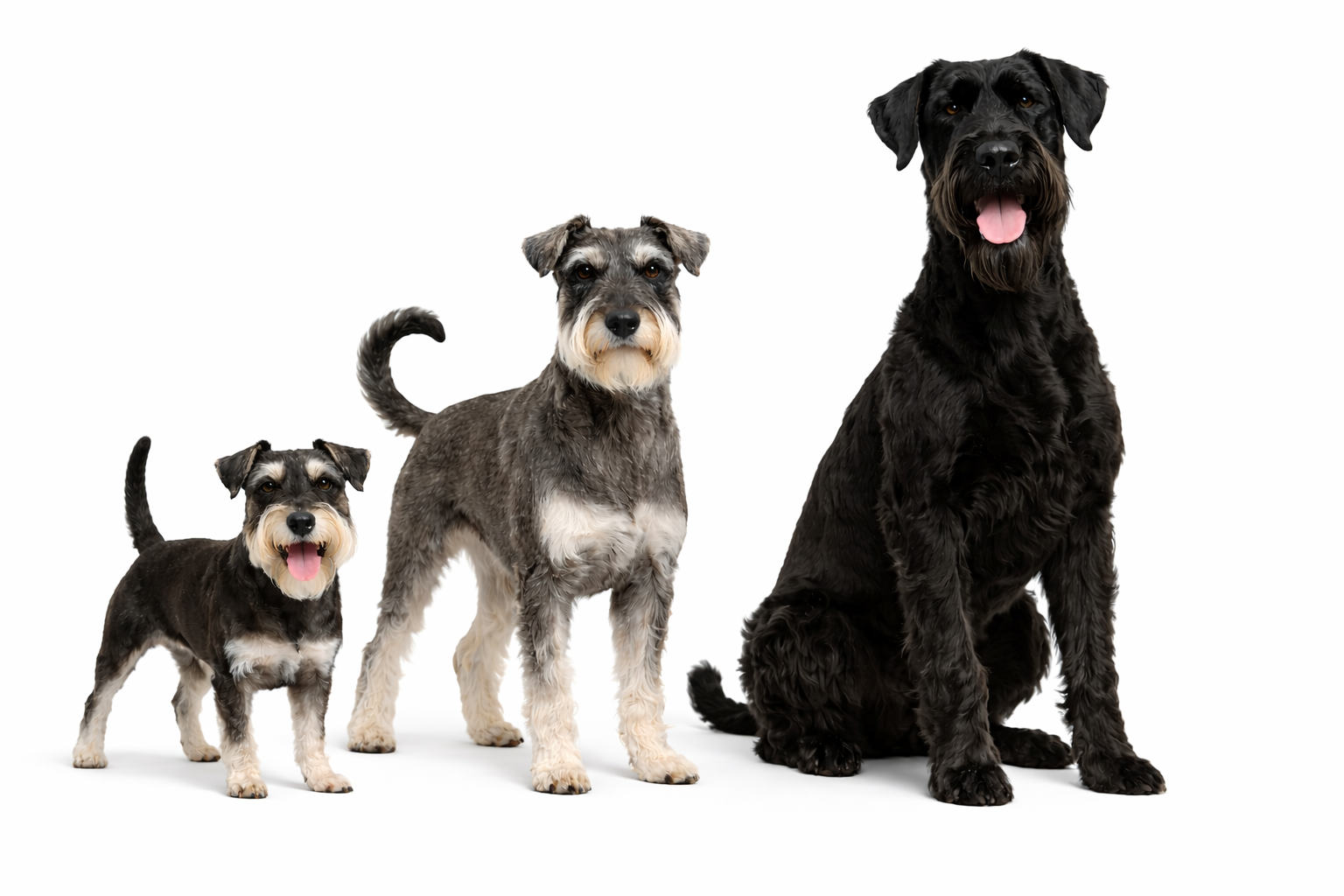
Schnauzer: Pet-to-Human Weight Comparison
Choose your Schnauzer size, then see how your dog’s weight compares to a human, view typical size ranges, and get body-condition tips.
Pet-to-Human Weight Calculator
This visualization tool scales your Schnauzer’s weight relative to the upper end of a typical healthy range for the selected size and sex. It supports body-condition conversations and does not replace veterinary assessment.
Typical Breed Ranges (Starting Point Only)
These ranges reflect common breed references and are not health targets. Body condition and lean mass matter more than scale weight.
How to Check Body Condition at Home
The number on the scale doesn’t tell the whole story. This quick check helps you spot changes early and decide when to check in with your veterinary team.
60-second home check
- ✓Ribs: You can feel them easily with light pressure.
- ✓Waist: From above, there’s a gentle narrowing behind the ribs.
- ✓Tummy tuck: From the side, the belly rises slightly toward the back legs.
If ribs are hard to find, the waist disappears, or the belly hangs straight down, your dog may be carrying extra body fat.
Feeding tips that make a difference
- ✓Measure meals. Use a measuring cup or kitchen scale.
- ✓Limit treats. Aim for treats under 10% of daily calories.
- ✓Recheck regularly. Monitor weight and body condition every 2–4 weeks.