
Breed Guide
Sphynx: Pet-to-Human Weight Comparison
This is a visualization tool. Human comparisons use the standard adult healthy BMI range (18.5–24.9) based on the height you enter. Estimated Body Condition Score (BCS) is based on percent above or below the breed’s typical range.
Pet-to-Human Weight Calculator
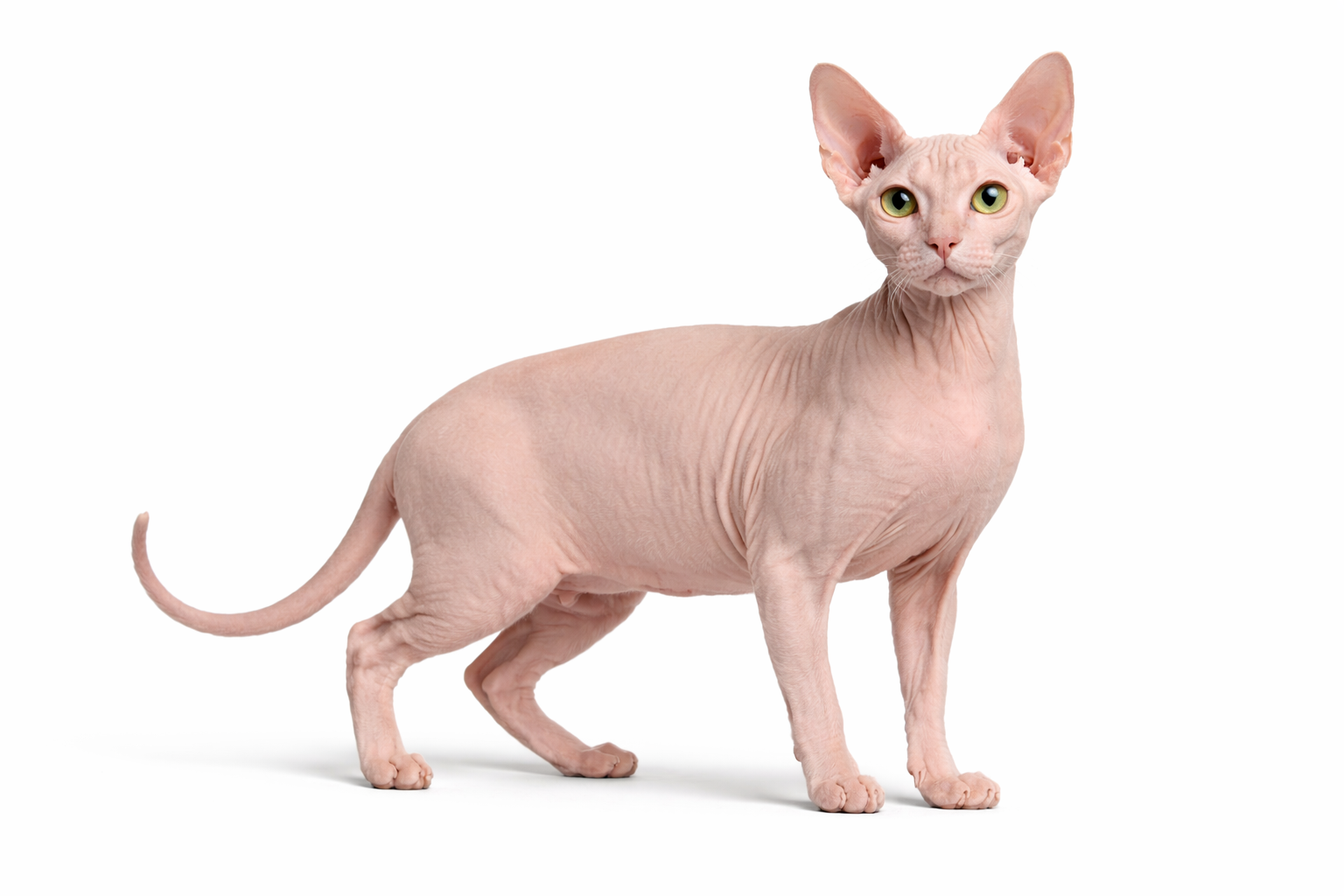
Tip: With no fur, body condition is easier to feel and see. Check ribs, waist, and belly pad.
Please select sex and enter a valid cat weight and height.
Estimated range based on common breed references:
Cat status:
Estimated Body Condition Score (BCS):
Human healthy weight range at (BMI 18.5–24.9):
How this comparison works:
The calculator uses standard adult BMI (18.5–24.9) to determine a healthy human weight range for the entered height, then applies the same percentage above or within that range as your pet’s weight relative to its typical range.
Estimated Body Condition Score (BCS) uses whole numbers only:
within typical range ≈ 5;
0–<5% under ≈ 4; 5–<10% under ≈ 3; 10–<20% under ≈ 2; ≥20% under ≈ 1;
0–<20% over ≈ 6; 20–<25% over ≈ 7; 25–<30% over ≈ 8; ≥30% over ≈ 9.
Confirm with APOP body condition charts and your veterinary team.
Typical Breed Ranges (Starting Point Only)
Female Sphynx
Typical weight: 6–9 lb (2.7–4.1 kg)
Compact build; muscular despite smaller size.
Male Sphynx
Typical weight: 8–14 lb (3.6–6.4 kg)
Muscular, broad-chested; lack of fur makes body condition easy to assess.
These ranges reflect common breed references and are not health targets. Body condition and lean mass matter more than scale weight.
How to Check Body Condition at Home (Cats)
The number on the scale doesn’t tell the whole story. This quick check helps you spot changes early and decide when to check in with your veterinary team. (Works for domestic short-, medium-, and long-hair cats.)
60-second home check
-
✓
Ribs: You can feel them easily with light pressure, but they aren’t visibly sticking out.
-
✓
Waist: From above, there’s a gentle narrowing behind the ribs (not a straight tube).
-
✓
Tummy tuck: Viewed from the side, the belly lifts slightly toward the hind legs. Many healthy cats also have a normal primordial pouch that hangs loosely.
If ribs are hard to feel or the waist disappears from above, your cat may be carrying extra body fat.
Feeding habits that make the biggest difference
-
✓
Measure portions. A kitchen scale is most accurate. “Eyeballing” is the #1 way calories creep up.
-
✓
Remember the biology. Cats are obligate carnivores, built for diets high in protein, moderate in fat, and very low in carbohydrates.
-
✓
Split meals or use feeders. 2–4 smaller meals or puzzle feeders can slow eating and reduce begging.
-
✓
Limit treats and extras. Keep treats under ~10% of daily calories and count toppers and lickable treats.
-
✓
Recheck regularly. Track weight and body condition every 2–4 weeks and adjust with your veterinary team.
Not sure? Your veterinary team can confirm BCS (including what’s normal vs. not for the primordial pouch)
and help set safe, realistic goals for your cat.
This page is for education only and is not medical advice. Always consult your veterinary team for a personalized plan.